An interview with Halcyon, illustrator of Tết All Around
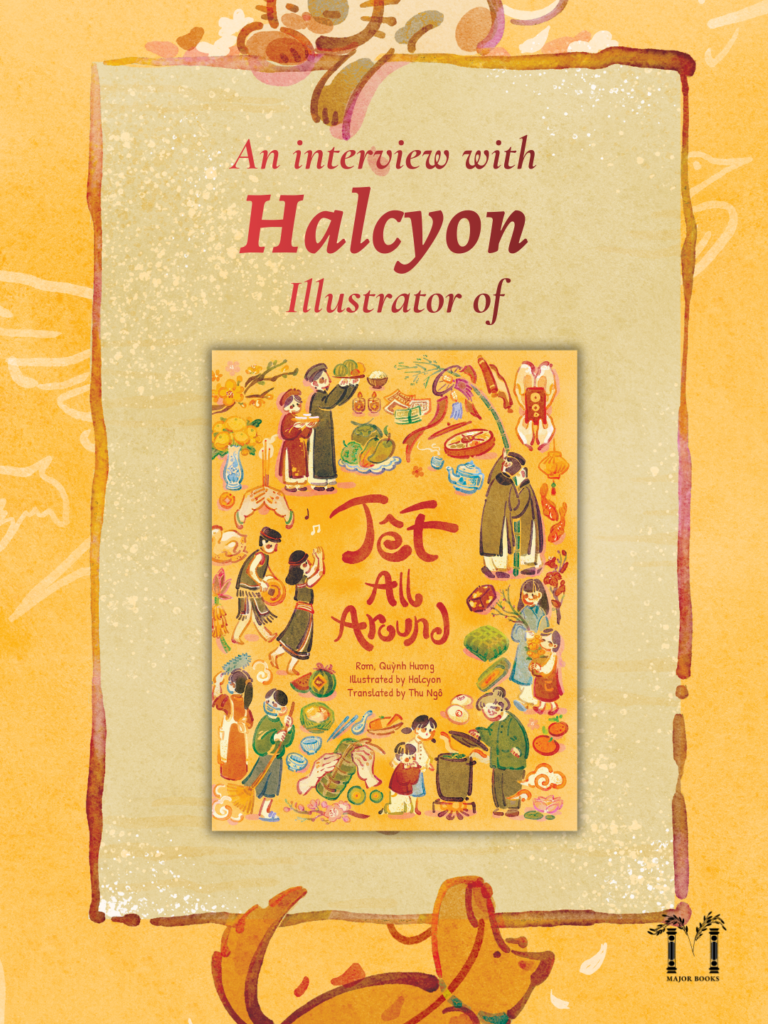
Tết All Around is a children’s picture book that explores the customs of Tết in Vietnam’s three regions. Could you share with us the thought process you had during this project? I was very happy to accept San Hô’s invitation [to join this project]. It’s been a while since I had the opportunity to draw cute things aimed at young readers. This is also the first book about Tết that I’ve drawn from start to finish, so I also had some worries, but I am very glad that the book was printed really beautifully. I’m sure the readers are very curious as to how you came up with the illustrations featured in the book? Actually, I am one of those children who don’t have a complete grasp on what a traditional Tết looks like across the different regions. So this book was an opportunity for me to gain a deeper understanding through the information and pictures San Hô provided me. I spent a lot of time researching additional information on the specific customs of each region, as well as grasping the differences in the atmosphere between each regional Tết. This learning process made me feel like I was a child again, being amazed by so many exciting things. It made me wish I could personally visit and experience each of these places. I completed the artworks on a digital software, opting for an art style that young readers could easily relate to. I also used soft and warm colour tones, in the hopes it can convey to young readers the familiar atmosphere of Tết around the country. I also want to express my gratitude to San Hô’s team who have been with me during this entire process, whose advice and guidance has helped me a lot. What is your favourite thing about the book? I really like the header section for each place. I looked for the most characteristic pictures of each region, and combined elements from them to fill the space surrounding the text. It’s small, but extensive and quite adorable. There are other little details I enjoy, such as the cat and dog that appear throughout the book, like two friends accompanying our young readers through their journey of exploring Tết. I hope discovering these little interesting details will bring them joy. What do you hope to bring to the readers through Tết All Around? I’m very happy to present the book Tết All Around to you all. I hope that through this book, young readers have an exciting voyage discovering the culture of Tết of the three regions of Vietnam. I will be very happy if reading this book can ignite in young readers the same curiosity and fascination I felt for local customs during my research process. I wish you all a warm and meaningful Tết with your family, and the opportunity to experience Tết in many new places. Halcyon This interview was originally carried out in Vietnamese on San Hô’s Facebook page. English translation by Anh Thư Truong Nguyễn. Original interview: https://www.facebook.com/sanhokids/posts/cu%E1%BB%91n-s%C3%A1ch-tranh-mu%C3%B4n-mi%E1%BB%81n-t%E1%BA%BFt-%C4%91%C3%A3-ph%C3%A1t-h%C3%A0nh-r%E1%BB%99ng-r%C3%A3i-v%C3%A0-nh%E1%BA%ADn-%C4%91%C6%B0%E1%BB%A3c-s%E1%BB%B1-%E1%BB%A7ng-h%E1%BB%99-t%E1%BB%AB-%C4%91%C3%B4/614202854512023/
Transpositiones: ‘Fluid Narratives: The Journey of Water in Vietnamese Contemporary Theatre, Prose, and Cinema’
Originally published October 2025 – by Nguyễn Tiến Phát Read on eLibrary
diaCRITICS: ‘Dangerous Games’
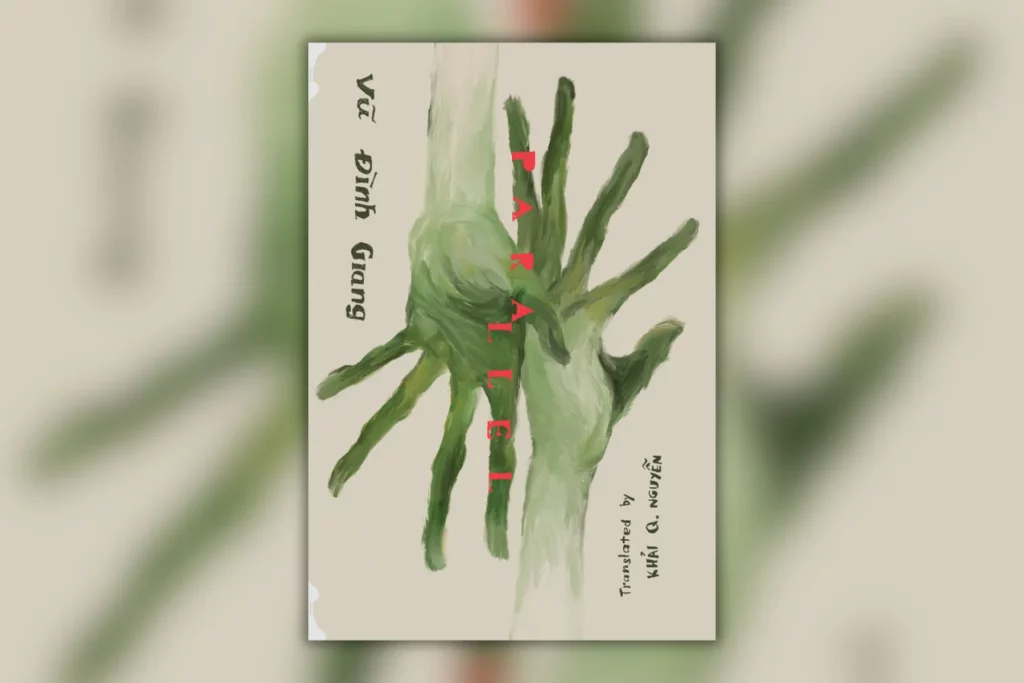
Originally published January 6th 2026 – by Thảo Tô Read on diaCRITICS
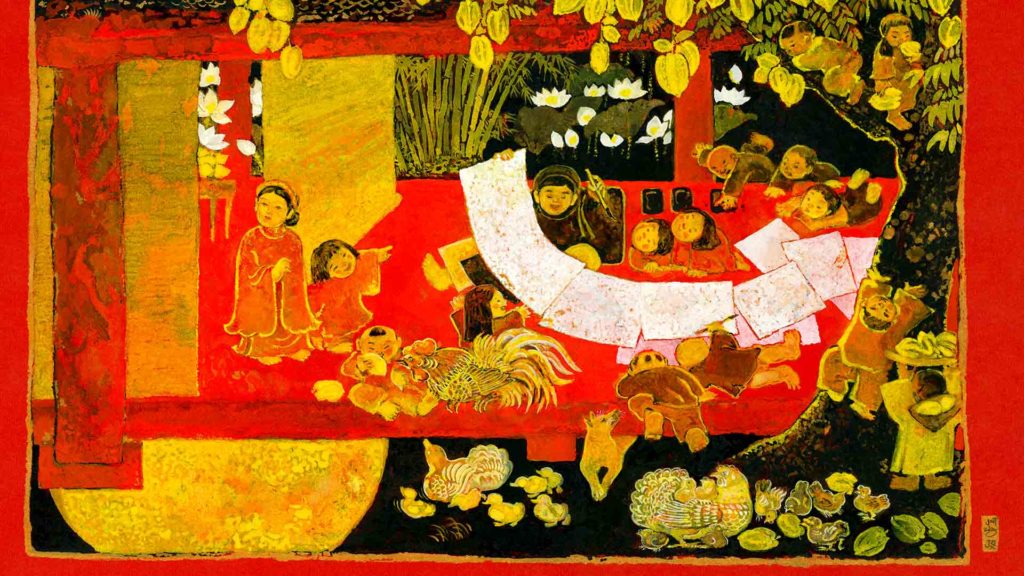
The Bookseller: “Major Books signs Treasury of Vietnamese Folk Tales”
Originally published October 31 2025 – by Lauren Brown Read on The Bookseller
“Sweet and bitter, black and pink, neither good nor bad”: A conversation between Vũ Đình Giang and Khải Q. Nguyễn
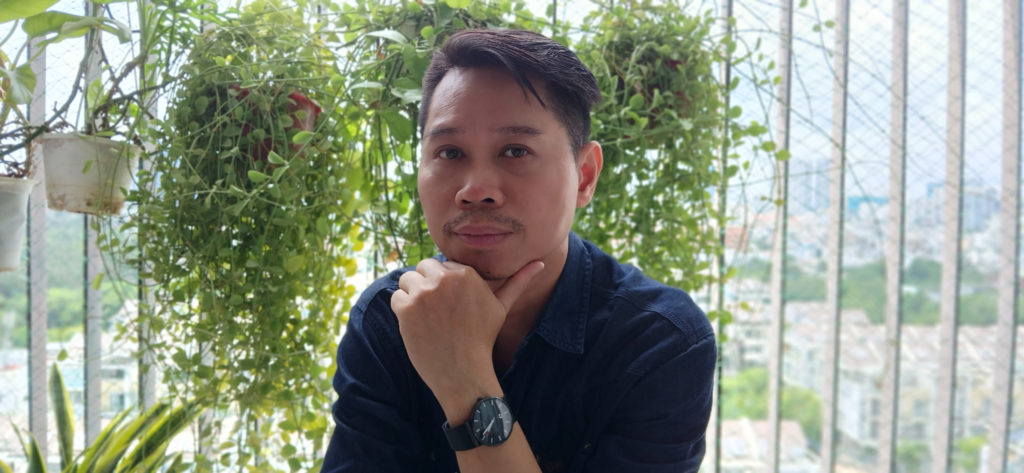
Originally published on ZZZ Review (currently on hiatus), October 2020, translated from the Vietnamese by Anh Thư Trương Nguyễn. (This interview first appeared in a slightly different form on ZZZ Review.) Vũ Đình Giang was born in 1976 in Tiền Giang in the Mekong Delta. He studied graphic design at Hồ Chí Minh City University of Architecture. His work has been recognised by Writers in their 20s’ Contest, one of Vietnam’s oldest and most reputable prizes for emerging literary talents. Parallels is Vũ Đình Giang’s début novel, first published in 2007 and re-printed in 2011. Translated into French by Yves Bouillé, Parallels was published in 2014 by Éditions Riveneuve in collaboration with the National Institute of Oriental Languages and Cultures (INALCO) in Paris, alongside other acclaimed contemporary Vietnamese works. Parallels has, however, not been widely available, due to a limited print run. This conversation hopes to shed some light on Vũ Đình Giang‘s writing process and inspiration, as well as his novel Parallels. Khải Q. Nguyễn (K.): When did you start writing fiction? Vũ Đình Giang: I wrote my first short story when I was eighteen, right in the middle of an exam season. It was in the spur of the moment, raw, written on school paper. It described the experience of taking exams like a rite of passage. I signed it with an alias and sent it to Áo Trắng Magazine. And it was selected for publication. It all started from there. K.: How long did it take you to write Parallels? Do you have a plan when you write? (Are you the type of writer that will come up with a plan for your characters beforehand?) Vũ Đình Giang: It took me a year, more or less. But the novel had formed in my head before that, before I turned eighteen. I felt too old to keep writing for litmags here and there, where a distinctive piece of prose barely got any attention. I felt that novice era had to end. With short stories, I go on instinct, let myself be inspired in the moment. It’s more difficult with novels, I always have to sketch it out first, a habit I’ve developed since my younger days in college; it helps me pay better attention to structure and composition, and the rhythm. I then make adjustements as I write. Even then, things can change unpredictably. K.: Do you write on paper or on your computer? Vũ Đình Giang: On computer. Except for my first two years at university when I wrote on paper. K.: Parallels opens, and ends, with the death of Leslie Cheung, a gay icon in Asia. Are you a fan of Leslie Cheung and his movies (Happy Together, Farewell My Concubine, movies mentioned in your novel)? Vũ Đình Giang: Like any young person at the end of the nineties, mass entertainment like music and movies were not readily available to me. I guess everyone is familiar with those movies, those icons, the masterpiece Farewell, My Concubine. I was enamoured by anything that I found. The youth always have a burning passion for everything. K.: At the time, did the news affect you? Vũ Đình Giang: Throughout my student years I read about many artists committing suicide, from all industries, and their hidden troubles as well as their embarassments. Every time I heard that another star was extinguished, it often took me a while to ponder on fate and limitation. As long as their talent and legacies will live on…. K.: Do you watch many gay movies? Are you impressed with a particular one? Vũ Đình Giang: It’s difficult to name them all because there are so many works throughout the years. But generally speaking, I like films that are more relevatory, daring, and socially challenging, more so than ‘purely eye-catching’ ones. Before movies, it is always books that pave the way. In particular, it was Annie Proulx’s masterful writing, I believe, that captured people’s hearts with Brokeback Mountain, even before the moving image helped popularise it. K.: H’s sex life could be said to be very diverse, but he is very lonely. Could you say this is an aspect of gay life? Vũ Đình Giang: Perhaps. But in this story, I think it can apply to anyone regardless of gender or sexuality, it’s up to the person. K.: Kan’s story of the old man and the horse–did you have any intention with this story? Did you ever hesitate to include this episode in your novel? Vũ Đình Giang: I was intent on it from the start. I needed an image that was powerful and clear enough to go with a character whose inner thoughts were brimming with lust. In context it was a bait, a catalyst, while in the readers’ point of view it was a turning point for the plot. Setting this up allowed the ensuing decadent events to flow naturally. K.: G.g, after recounting the affair between him and the old neighbour he considered an adoptive father, concluded: ‘We belonged to another world, which could’ve been visible or invisible; an unnamed world that had yet to be recognised.’ H says: ‘…we are all stray creatures, outcast and abandoned.’ In your imagination, does a utopia exist for them? Vũ Đình Giang: No. Utopia only surfaces in art, a space where the minority, skilled in the art of curating and editing, offer the majority a temporary escape from distress. None of us is spared from facing reality, because sadness is a rule of the universe. K.: Sexual relations between a young person and an older person can be considered a sensitive topic. Through G.g’s story of him and his old neighbour, Parallels also challenges the idea that younger people are unaware of their sexual wants. Would you like to elaborate a bit further? Vũ Đình Giang: I don’t think it is a taboo subject. Before modern psychology probed it, laws forbid it, and social morals made a fuss about it, it was there, ready to
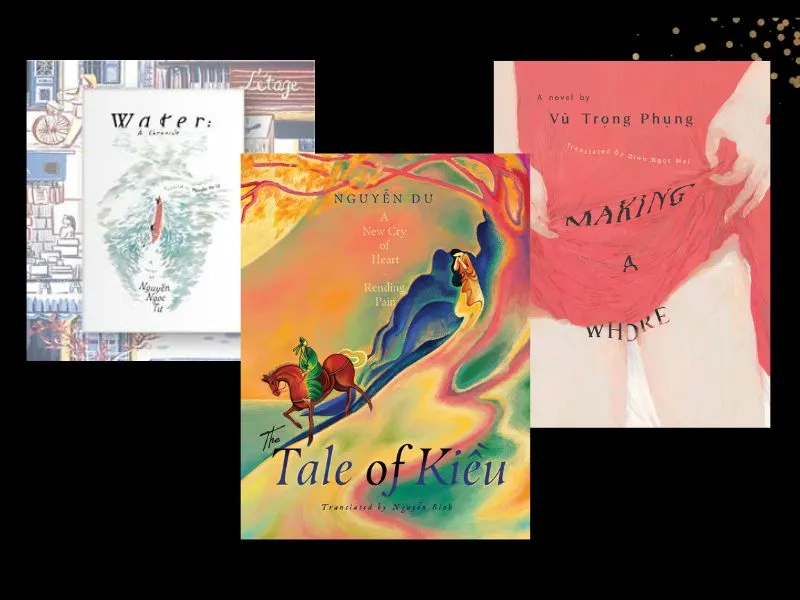
Arts Hub: “New publisher aims to make Vietnamese literature the next translation trend”
Originally published April 22nd 2025 – by Thuy On Read on Arts Hub
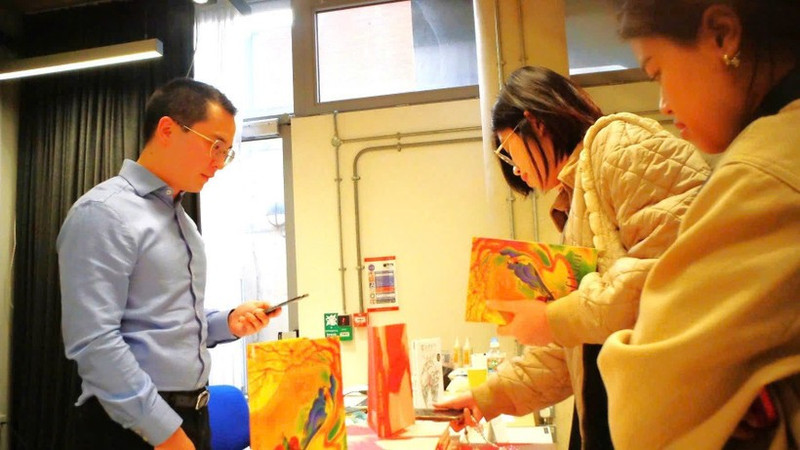
Nhân Dân: “Remarkable efforts by young Vietnamese in UK”
Originally published August 28 – by Ha Yen Read on Nhân Dân
Vietcetera: “Meet The People Bringing Vietnamese Literature To The World”
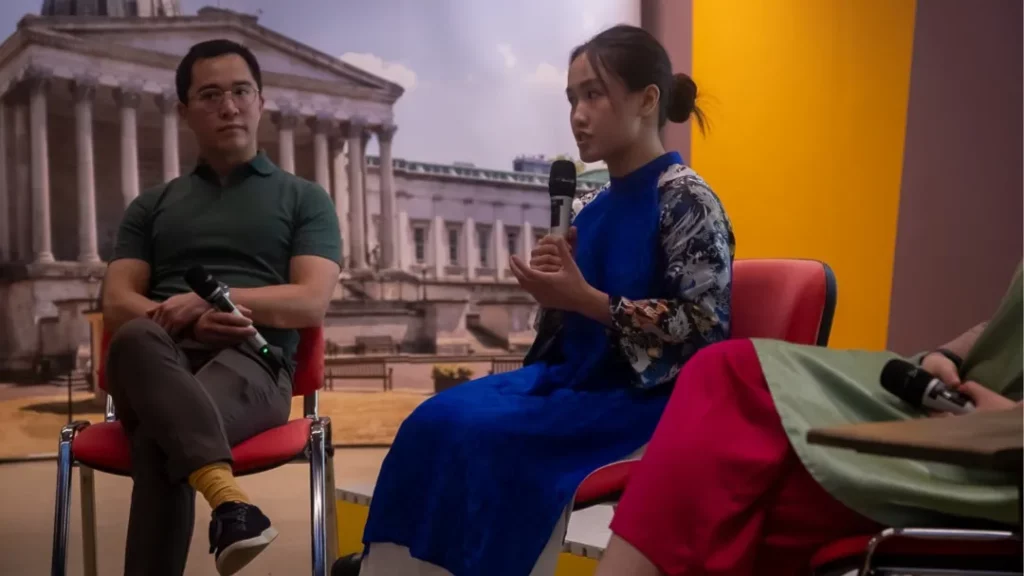
July 12 2025 – by Kiều Nga Read on Vietcetera
Major Books on Tuổi Trẻ News: ‘Major Books: The journey of bringing Vietnamese literature to the world’
December 2, 2024 – by Kim Thoa Read on Tuổi Trẻ News
‘Parallels’ reviewed on Saigoneer by Paul Christiansen: ‘Within the Shocking Brutality of Queer Novel ‘Parallels’ Rests Poignant Poetry’
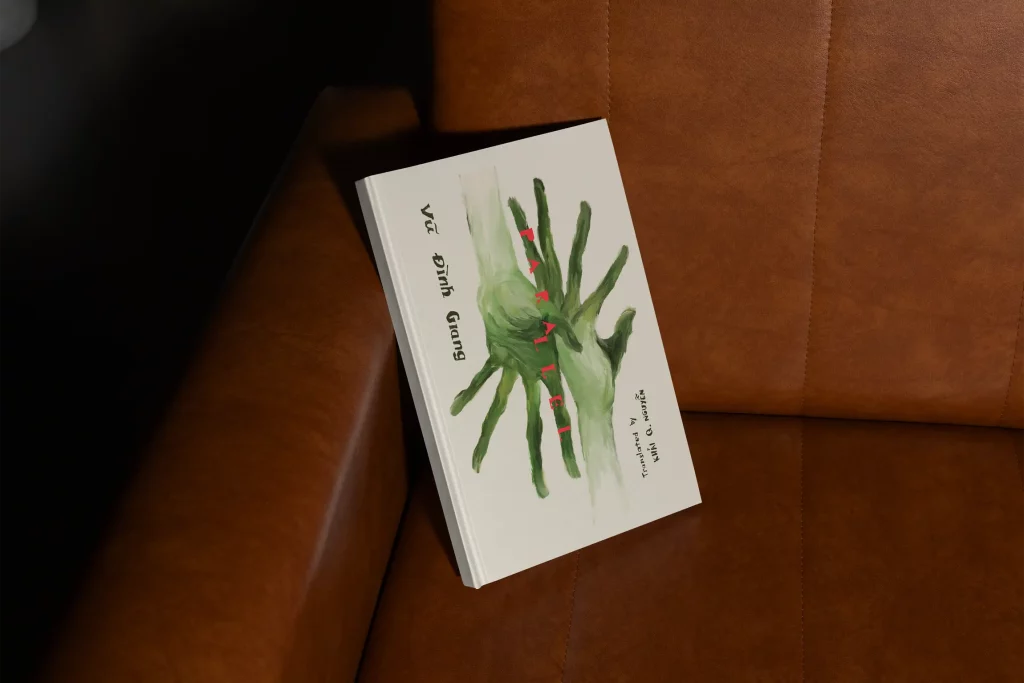
Read on Saigoneer